





Includes Simple Extractions, Sedation, Bone Grafting, Healing Denture, AND Final Denture!
*Cannot be used in conjunction with insurance.
“I don’t have to hide anything with my teeth anymore. It’s a true blessing.”
“It makes me happier. It makes me smile more…I have a personality now!“
While other offices might advertise a low starting price, what they don’t mention is that price only covers the final denture – not the extractions, sedation, healing dentures, or bone grafting that most patients require. By the time everything is factored in, the “affordable” denture option ends up costing much more than expected.
Low “starting at” prices with costly add-ons that are often necessary
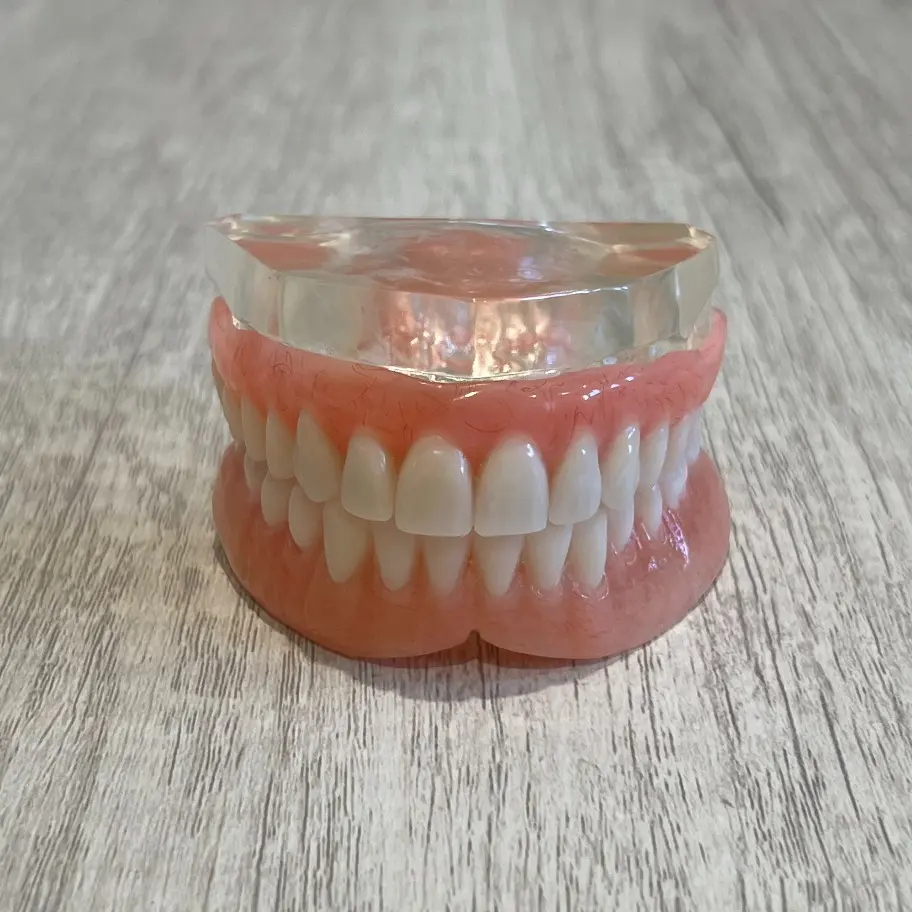
Our pricing for dentures is $1,999 per arch for Immediate Dentures and $2,999 per arch for Traditional Dentures. This is the lowest price in the area while also providing the best final result. At our offices, you can come in and leave with a new set of high-quality dentures after just two appointments. Our denture pricing includes:
Dentures are an important investment in yourself. Having the option to break this investment down into monthly payments can help make these life-changing services more accessible and easier to fit into your budget. We work with a variety of financing providers who offer payment plans to cover either all or part of your procedure. This is a great option for all patients, especially those who are on a fixed income. With these flexible financing options, you can enjoy the benefits of a healthy, beautiful smile without breaking the bank.
Contact us to learn more about our financing options and schedule your FREE Consultation today!

If you’re living with missing, damaged, or failing teeth, dentures can give you more than just a beautiful smile – they can give you your life back! Our All-Inclusive Denture Bundle makes the process simple and stress-free, covering everything from gentle extractions to your custom-fit final dentures.
Modern dentures are designed to look natural, feel comfortable, and restore confidence when eating, speaking, and smiling. Also, with our advanced digital technology and quick turnarounds, you don’t have to wait weeks to start feeling like yourself again.
If you’re ready to put your dental worries behind you and make the switch to dentures, our All-Inclusive Denture Bundle is built to make your transformation smooth, affordable, and worry-free!
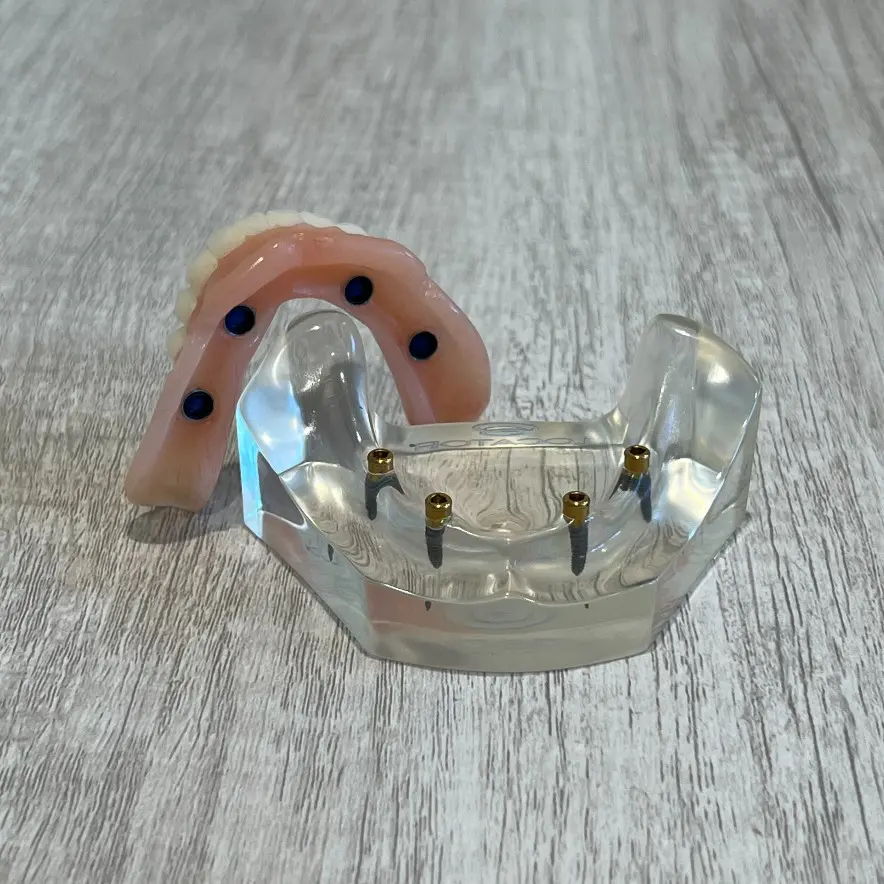
Ready to take your smile to the next level? Snap-in dentures (a.k.a. click-in, overdentures, or implant-retained dentures) offer the ultimate combination of comfort, stability, and confidence. Instead of relying on adhesive, these dentures are secured by 2-4 dental implants that “snap” into place – giving you a secure fit that stays put when you talk, eat, and laugh.
Our patients love snap-in dentures because they feel more natural, don’t shift or rub, and make it easier to enjoy the foods you’ve been missing out on. They also help preserve your jawbone and facial structure, giving you a younger, more natural look over time.
At our practice, upgrading to snap-in dentures is easier than ever! We can place the implants on the same day as your extractions, or give you a traditional denture and wait until you’re ready to convert…either way, you’re goals will guide our process and we’ll make sure you feel comfortable and informed every step of the way!
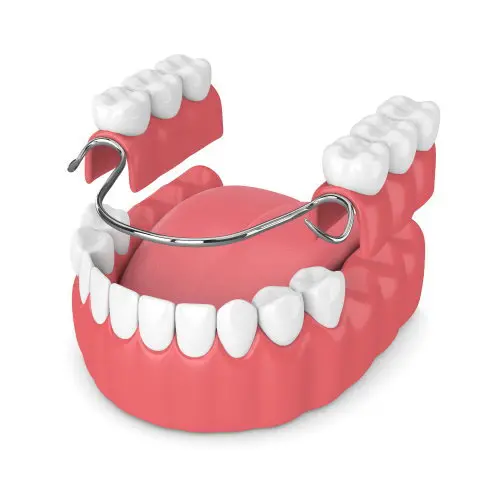
Removable partial dentures are great when you need an affordable option to help replace several missing teeth in either the upper or lower arch. A partial has replacement teeth connected to a gum-colored plastic base that often has a cast metal framework. Partial dentures can help keep your other teeth from shifting, allow you to speak and eat better, and help support your cheeks and lips so your face does not appear older and sunken in.
Cast Metal Partial Dentures slide over your existing teeth to help fill any gaps you may have. They are custom-made by expertly trained technicians, fit securely in place, and are very durable.
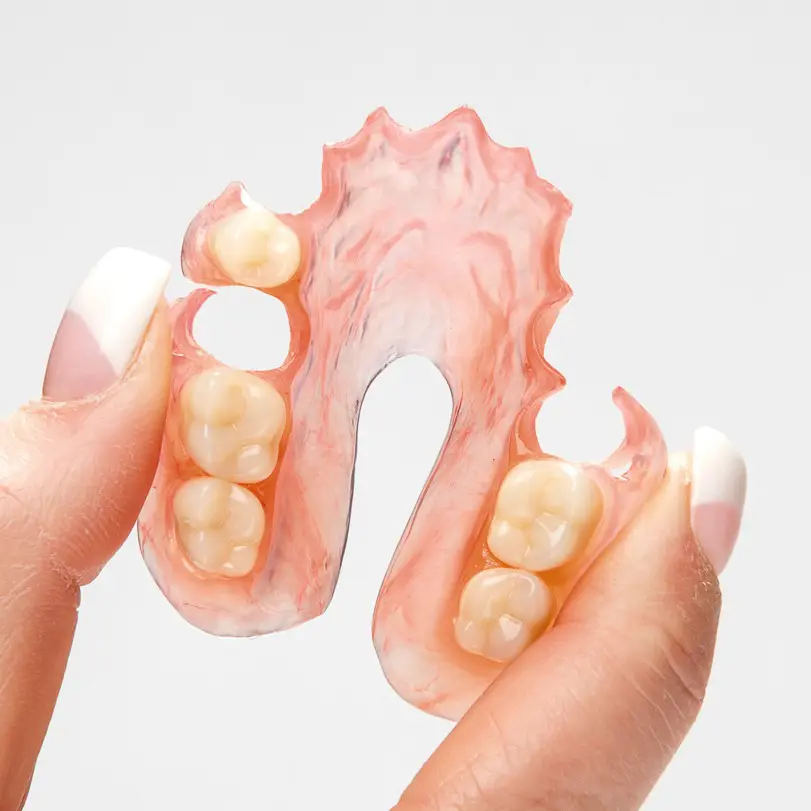
Flexible Base Partial Dentures (also called Valplast partials) use a state-of-the-art technology to create a lightweight, metal-free partial denture. Each appliance is handcrafted to help ensure a natural look and feel with increased flexibility and comfort.
Dentures require daily maintenance in order to keep them clean and looking nice for years to come. If you do not properly care for your denture it can harbor bacteria and become permanently stained.
Be careful when cleaning your denture in the sink. Setting out a folded towel or filling the sink with water prior to handling them can help prevent your dentures from breaking if you accidentally drop them.
Utilize a mild cleanser to help clean your denture. Many cleaners are too abrasive and can damage your appliance. We recommend you always ask your dentist what they recommend or check for the American Dental Association (ADA) seal of approval when determining which products to use.
Your dentures need to be kept moist when you are not wearing them. We recommend you keep them in a cleaning solution or water to help prevent them drying out or losing their shape.
Even if you have a complete set of dentures (top and bottom), it is very important that you clean your tongue and gums daily and schedule regular dental checkups to ensure that your smile stays healthy.
Dentures are removable prosthetic devices that are used to replace missing teeth and surrounding tissues. They can be used to replace all the teeth in the upper or lower jaw (complete dentures) or only a few missing teeth (partial dentures).
The process of getting dentures typically involves a couple appointments to take impressions of your mouth, make models of your teeth, and create the final dentures. We will also work with you to select the size, shape, and color of your denture teeth to ensure a natural-looking and comfortable fit.
After the dentures are placed, you may experience some discomfort or difficulty speaking and eating, but these issues typically resolve with time and practice. It’s important to follow your dentist’s instructions for cleaning and caring for your dentures to maintain their function and appearance.
Yes, there are several different types of dentures available, and the best type of dentures for you will depend on your individual needs and preferences.
Here are some of the most common types of dentures:
The best type of dentures for you will depend on factors such as the number and location of missing teeth, your oral health, your budget, and your personal preferences. Your dentist can help you determine the best type of dentures for your individual needs and circumstances. We will also discuss the pros and cons of each type of denture to help you make an informed decision.
The lifespan of dentures can vary depending on a few factors, such as the type of dentures, how well they are cared for, and changes in the mouth over time. In general, dentures should be replaced every 5 to 10 years.
Over time, dentures can become worn, stained, or misaligned, which can cause discomfort and difficulty with eating and speaking. Additionally, as the mouth changes due to bone loss, the fit of the dentures can become loose, which can also cause discomfort and make it difficult to chew and speak properly.
It’s important to have regular check-ups with a denturist to ensure that your dentures are fitting properly and to address any issues that may arise. If you’re experiencing discomfort or difficulty with your dentures, give NAK Dental Group a call or schedule an appointment online today and we’ll get you in right away!
To view our transparent dentures cost, click here.
The cost of dentures may not be covered by insurance, or may only be partially covered. We recommend that you check with your specific insurance provider to see if you have coverage for dentures. At NAK Dental Group, we offer financing options which spread out your payments and help fit dentures into your budget.
A partial denture is a removable dental appliance used to replace one or more missing teeth. It typically consists of replacement teeth attached to a pink or gum-colored plastic base, which is supported by metal clasps that attach to the remaining natural teeth.
Partial dentures stay in place through a combination of the clasps, which grip onto the natural teeth on either side of the gap, and the base material, which rests against the gums and other soft tissues in the mouth. The clasps are designed to be flexible enough to allow the partial denture to be easily removed for cleaning and maintenance, but strong enough to provide a secure fit during normal use.
Proper care and maintenance of your partial denture is important for ensuring its longevity and effectiveness. You should follow your dentist’s instructions for cleaning and storing your partial denture, and have it professionally checked and adjusted as needed to maintain a proper fit and function.
The cost of partial dentures can vary depending on several factors, such as the type of partial denture, the materials used, the complexity of the case, and any additional services that may be required.
In general, the cost of a partial denture can range from a few hundred to a few thousand dollars, depending on the factors mentioned above. The cost may be higher if the partial denture requires more specialized materials or a more complex design.
The cost of dentures may not be covered by insurance, or may only be partially covered. We recommend that you check with your specific insurance provider to see if you have coverage for dentures. At NAK Dental Group, we offer financing options which spread out your payments and help fit partial dentures into your budget.
Yes, you can eat with partial dentures. Partial dentures are designed to replace missing teeth and restore your ability to chew and eat comfortably.
However, there may be some limitations to what you can eat with partial dentures. It’s important to avoid hard or sticky foods that could damage or dislodge the denture, such as hard candy, nuts, popcorn, and chewing gum. Instead, it’s best to stick to softer foods that are easier to chew, such as cooked vegetables, soft fruits, and well-cooked meats.
If you experience any discomfort or difficulty while eating with your partial denture, give NAK Dental Group a call today and we can have your denture adjusted or replaced if necessary.
While it’s possible to sleep with partial dentures in, it’s generally not recommended. It’s important to remove your partial dentures at night and give your gums and remaining teeth a chance to rest.
Wearing your partial dentures for extended periods, such as overnight, can lead to irritation, soreness, and even infection of the gums. It can also cause damage to the denture or remaining teeth, as well as increase the risk of plaque and bacterial buildup.
It’s recommended that you remove your partial dentures before going to bed and store them in a clean, dry place. You can soak them in a denture cleaning solution overnight to help keep them clean and fresh.
Yes, temporary dentures are designed to allow you to eat and speak during the transition period while your permanent dentures are being made. However, there are some limitations to what you can eat with temporary dentures.
Temporary dentures are typically made of acrylic, which is not as strong as the materials used for permanent dentures. Therefore, it’s important to avoid hard or sticky foods that could damage or dislodge the temporary dentures. Some examples of foods to avoid include hard candy, nuts, popcorn, and chewing gum.
Instead, it’s best to stick to softer foods that are easier to chew, such as cooked vegetables, soft fruits, and well-cooked meats. You may also want to cut your food into smaller pieces and chew on both sides of your mouth to distribute the pressure more evenly.
It’s important to follow any specific instructions provided by your dentist regarding caring for and using your temporary dentures while you wait for your permanent dentures to be made.
Temporary dentures are designed to be a short-term solution while your permanent dentures are being made. The lifespan of temporary dentures can vary depending on a few factors, such as the type of denture, how well they are cared for, and how long they need to be worn.
In general, temporary dentures can last anywhere from a few weeks to a few months. They are not meant to be a permanent solution and are not as durable as permanent dentures. Over time, temporary dentures may become loose or uncomfortable as the gums and bone heal and change shape following tooth extraction.
It’s important to follow any specific instructions provided by your dentist regarding caring for and using your temporary dentures while you wait for your permanent dentures to be made. This can help ensure that they last as long as possible and that your transition to permanent dentures is as smooth and comfortable as possible.
We’ll never share your info with anyone